Youth Unlocked: Interview Series with Young People
For this interview series, The YP Foundation talked to seven young people from different regions across the country who shared their experiences and challenges they faced due to the lockdown.
Krishneshwar from Port Blair, Andaman and Nicobar Islands shares the impact on the education of children as there was no proper internet facility available. They were sent notes through their teachers on phones, with some classes on television. This would lead to a lack of practical knowledge. Being a part of fishing community, their families also faced a lot of stress.
Upasana shares her experience of lockdown and it’s impact on her education. Not everyone is the home owns a phone and adding to that, there’s societal pressure as a girl using a phone might be perceived as a spoiled child. A study by Center for Budget and policy also found that during COVID-19, access to mobile phones by girls was lower than that to male adults and boys. She says that there shouldn’t be any discrimination between boys and girls.
Meena recounts her experience of COVID-19 and the lockdown that followed. People with a job had some relief but Meena’s husband, who is a taxi driver faced difficulty in making ends meet. Her kids kids had to study through one phone of her husband, which meant that one or the other had to miss their classes. They received help of ration through Sahyog NGO. However, the impact of the lockdown was far reaching.
Gita shares her experience of how lockdown impacted her education as her family had to come back to her village from Mumbai during the COVID-19 pandemic.
Gita shares her experience of how lockdown impacted her education as her family had to come back to her village from Mumbai during the COVID-19 pandemic.
Ganga shares her experience of working with Jatan Sansthan and providing Sexual and Reproductive Health Information to 600 adolescent girls and boys where she also taught the them the process of making sanitary pads. She provided emotional support to adolescent girls who weren’t able to access sanitary pads during to the lockdown. Since subsidized sanitary pads are provided at schools and government schools at times acts as the only means of access for many low-income adolescent girls, the closure of these caused huge gaps.
Lakhan shares his experience of the hardships he struggled through the lockdown. He had to suffer through mental stress and also the difficulty of earning money. Due to closing of schools because of the lockdown, it was also hard to concentrate and excel in studies. He wishes to become a police officer and serve the nation.
Report: Informing COVID-19 relief and response with young people’s experiences
The insights collated are representative of diverse communities of adolescents and youth including informal labourers, tea plantation labourers, marine fisher-folk, gender and sexual minorities, tribals, sex workers, people living with HIV, substance users, Dalit, school-goers, medical students and those in alternative care (shelter homes, correctional homes).
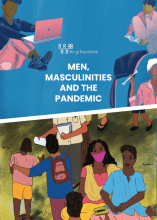
Prompted by the need to build programme designs that address the intersecting and diverse realities of young men and boys, the Mardon Wali Baat programme undertook a research study to document and analyse the impact of COVID-19 on 17 development organisations engaging young men and boys on issues of gender, livelihoods, health, education and WASH in Uttar Pradesh. This was followed up with a consultation anchored by TYPF, attended by 15 organisations working on diverse themes of gender, livelihoods, health, education and WASH with young men and boys in Uttar Pradesh. The following reports detail the findings of the research and the recommendations arrived at through the consultation to improve programming for engaging with young men and boys in the context of crises and disasters such as the COVID-19 pandemic.
In a world that has been obsessed with young people as a large demographic — as consumers, beneficiaries, as disruptors and innovators — the pandemic suddenly rendered them invisible. As a group that wasn’t particularly vulnerable to the disease, the shift was understandable as well. However, the pandemic’s debilitating impact can’t be seen only in terms of death tolls or infection rates; the long-term impact of global shut-downs have to be accounted for too. For the 365 million plus adolescents and young people, this means a disruption to education, SRH services, mental health, and dignity and livelihoods, among others. This anthology shines the spotlight on young people not just as the ones affected by the pandemic, but also the inheritors of its aftermath. It presents personal narratives as representative data and a window into the lives of young people in lockdown.